Meeting Tips
Why plan efficient meetings?
- Improved focus (focused agenda)
- Prevent overrun and provide transition time
- Increases productivity (ie. Emails between meetings)
- Reduced meeting fatigue
When to have a meeting?
- Is there a specific issue that needs to be discussed?
- Yes - go to 2
- No - no meeting
- Is the topic of the meeting urgent?
- Yes - go to 3
- No - Send an email or schedule meeting for a future week
- Determine the objective (ie. inform, discuss, problem-solve, decide):
- Define objective and circulate - go to 4
- Consider all alternatives:
- Email, messenger, quick phone call - do that
- No - go to 5
- Does the meeting require input from a full team?
- Yes - go to 6
- No - schedule a 1-1 call
- Set agenda with clear goals, objectives, and possible outcomes:
- Yes - schedule meeting with agenda, objectives and possible outcomes in the invite.
- No - clearly define and then send calendar invite
Meeting Checklist
- Clear agenda circulated before the meeting
- Identify key participants (no need to include others, more is not merrier)
- Set time limits for each agenda item
- Share relevant materials before the meeting (or create time during meeting for everyone to read materials)
- Establish roles, if necessary (ie. facilitator, timekeeper)
- Have notetaker, or use AI to summarize meeting and circulate the details
Meeting Lengths
New team protocol: 25 and 50 minute meetings, go to Preferences > Calendar

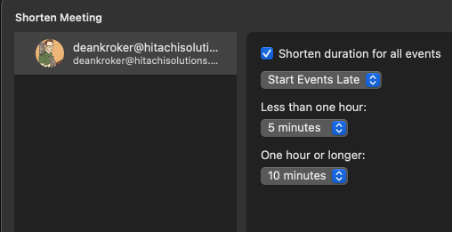
Tips for efficient calendars
- Block two hours per day for deep work. (Ideally company wide)
- Limit meeting times to 25/50 minutes
- Never have more than 2 back to backs without a 30 minute break.
- Theme your days (ie. Fridays are administrative, Wednesdays are project work, etc.)
- Create meeting free days or half days (ie. Meeting free Fridays, no meetings on Monday and Wednesday afternoons)
- Prioritize tasks: Use Eisenhower matrix
- Review Sessions: Once per month, review recurring meetings and question if they are still necessary at the current cadence
- Email time blocks: Pick two to three times per days to check and respond to emails rather than checking throughout the day
- Reflective time: Have at least one hour blocked per week for reflection (what was achieved this past week, what direction is right going forward)
- Tech free space (ie. screen free lunches, no emails after 7pm, etc.)