Workflow for Work Items
Expected Behaviors for Team:
To ensure that each member can fully detail requirements, acceptance criteria, risks, dependency, and/or carry over explanation for each work item {user story, task, bug} assigned.
- Create an understanding of the process from creating work items to ensuring all steps are completed and done.
- DON’T FORGET TO STORY POINT! – This will allow us to understand the amount of effort taken
- This is a collaborative effort – not just one person creating and writing tickets!
- This will allow for Product, Agile, and Tech to understand the purpose of each work item, what needs to be done, and what the next flow process potentially would be.
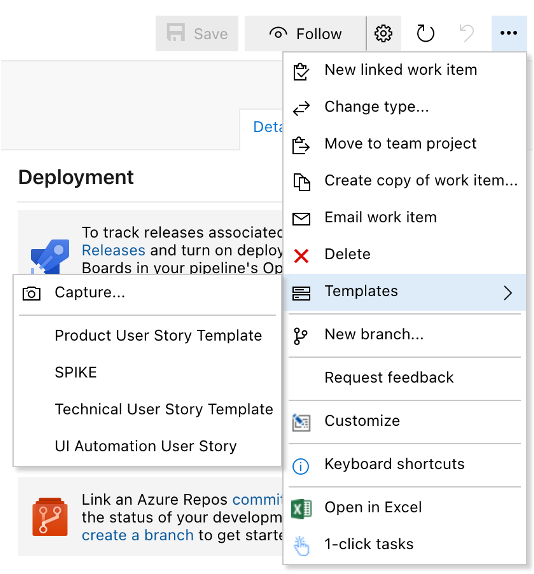
Best Practice:
When creating a new Work Item, on the right hand side, there are TEMPLATES that may help you when filling out the criteria.
Starting off with the purpose of the Work Item, utilize :
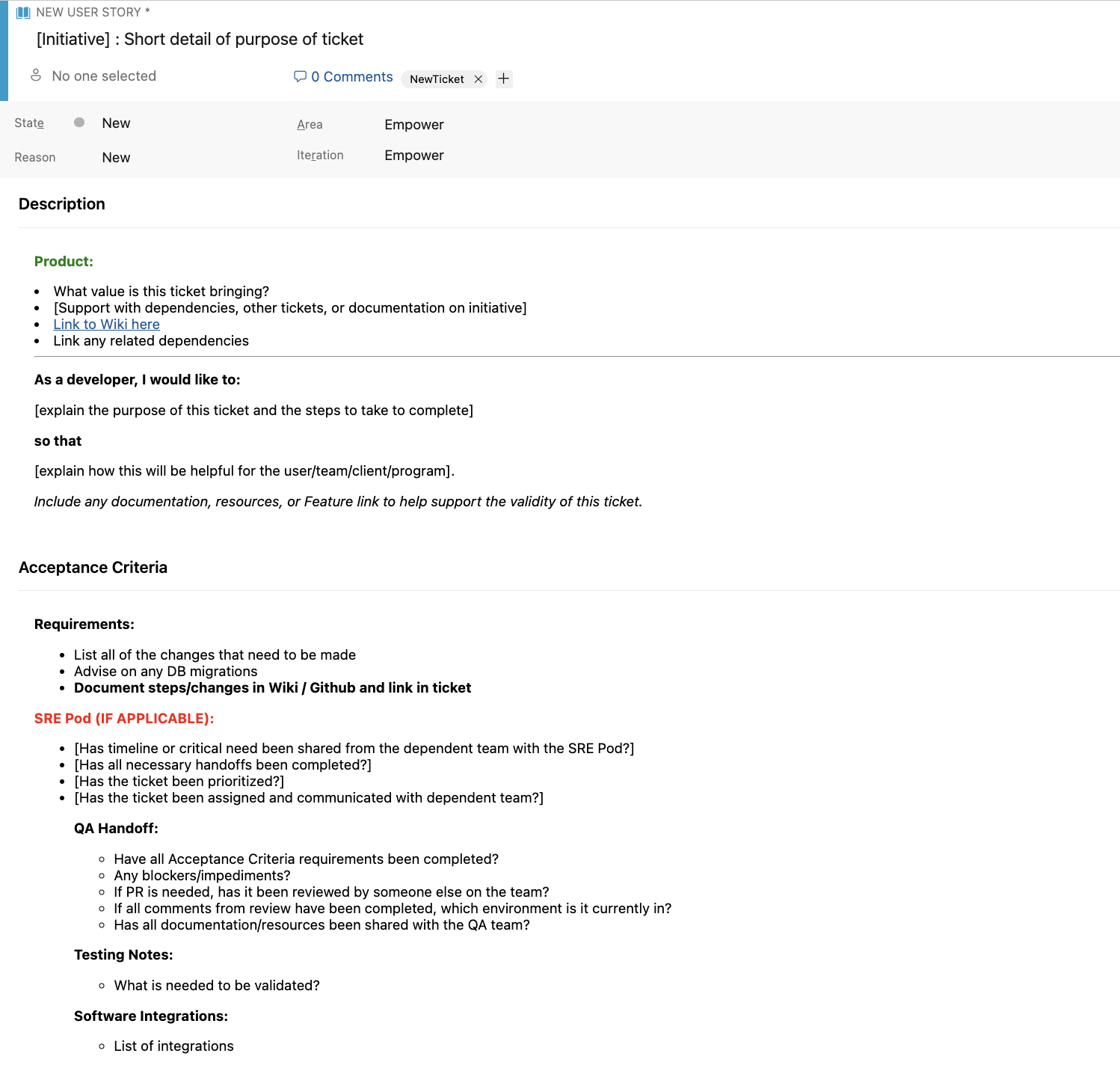
As a developer, I would like to [explain the purpose of this ticket and the steps to take to complete] so that [explain how this will be helpful for the user/team/client/program].
- Acceptance Criteria will follow suit where we talk about what the Developer will need to do in order for it to be considered completed and done.
- DON'T FORGET TO STORY POINT! - Story Pointing-Estimating Guide
Helpful Tips:
- Add Start or End Date so that the Developer knows the timeline given
- CARRY OVER ITEMS: Add in the comment section what are the final steps needed to complete.
- Continue to ask questions ESPECIALLY during Refinement or Sprint Planning sessions together
