Task Tracking
In the Agile process, teams forecast work and define tasks at the start of each sprint. Each team member then performs a subset of those tasks. Tasks can include development, testing, and other kinds of work. For example, a developer defines tasks to implement user stories, and a tester defines tasks to write and run test cases. User stories and bugs can have tasks associated with the ticket. Think about it like this, "what do I need to do in order for this ticket to be considered completed?" and "how much time do I think it will take for it to be completed?" Similar to Definition of Done (DoD) and Acceptance Criteria. Note: QA testable tasks can be challenging to estimate time, defer to the team on how to estimate.
Definitions
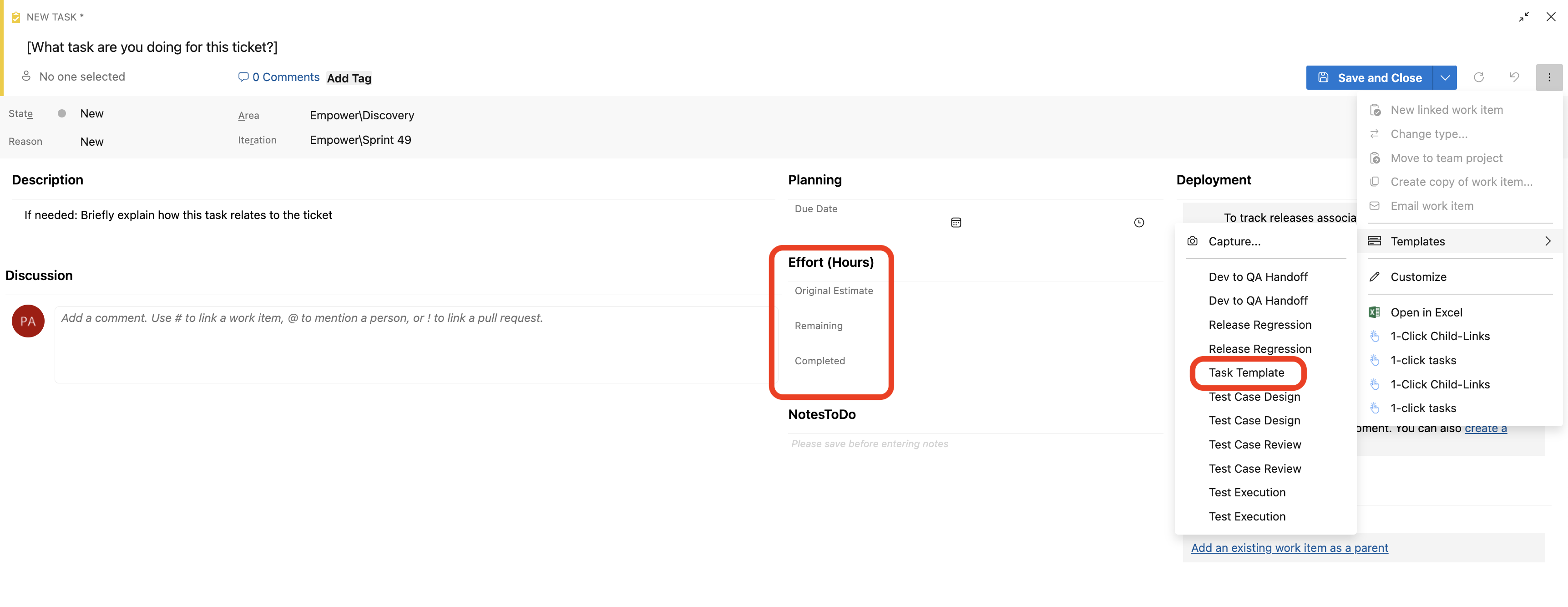
Original Estimate
The amount of estimated work required to complete a task. Typically, this field doesn't change after it's assigned. You can specify work in hours or in days. There are no inherent time units associated with this field.
Remaining Work
The amount of work remaining to complete a task. As work progresses, update this field. This field is used to calculate capacity charts, the sprint burndown chart, and the following SQL Server reports: Burndown and Burn Rate, Remaining Work, and Status on All Iterations. If you divide a task into subtasks, specify hours for the subtasks only. You can specify work in any unit of measurement your team chooses.
Completed Work
The amount of work spent implementing a task.
Task Template - Easy to fill in details if you do not know what to write.
Work Details
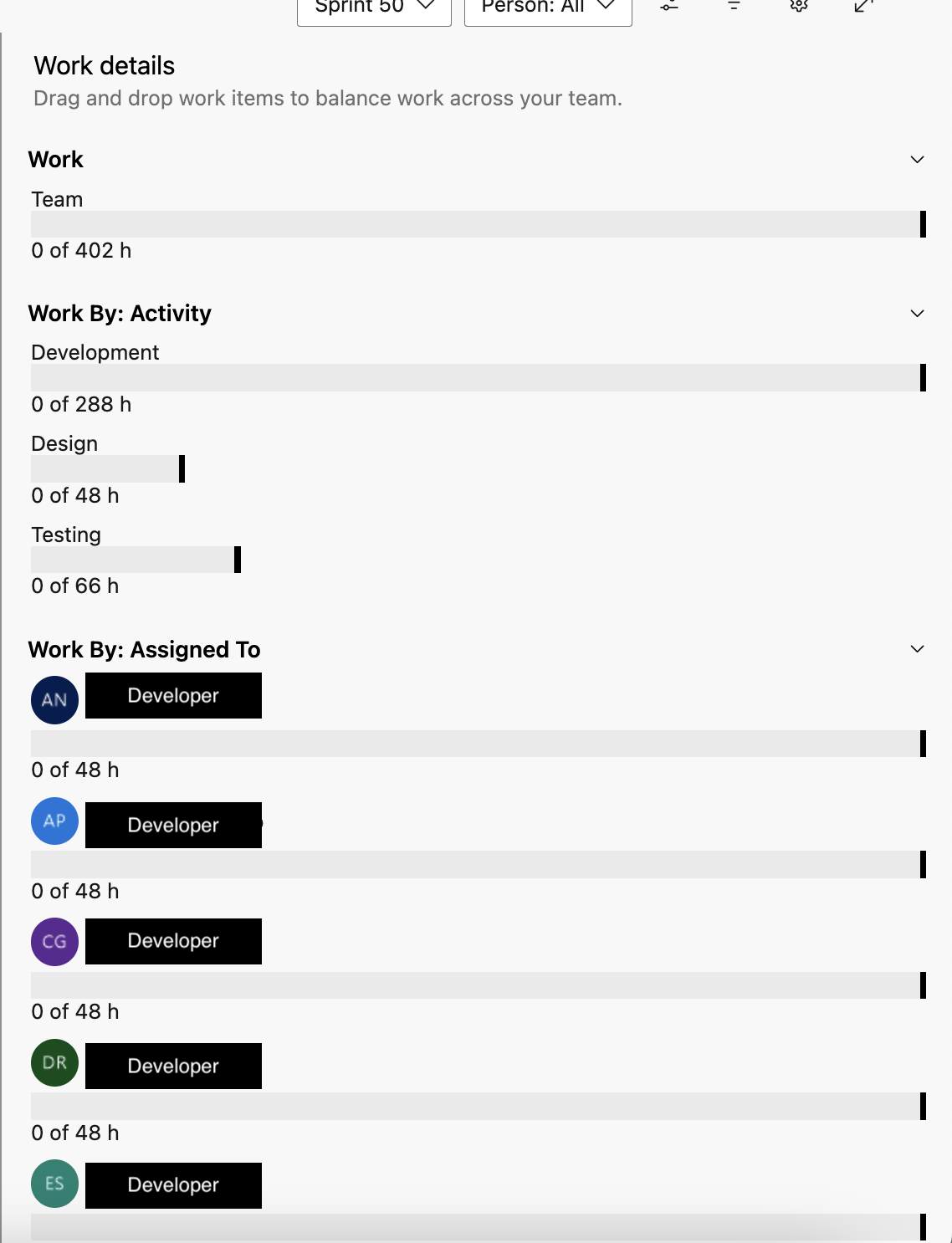
This will allow the team to understand each team member's capacity (this includes time off, company wide day offs, billable client work). As a team, we want to see where we over-commit or under-commit. The Sprint Burndown chart will also show us how we did as a team on deliverables, any sprint injections, or any plateaus from completion.