Story Pointing and Estimation
The purpose of story pointing is to help the team understand the over all effort required to fully implement a user story or any other piece of work. Teams assign story points relative to work complexity, the amount of work, and risk or uncertainty. Values are assigned to more effectively break down work into smaller pieces, so they can address uncertainty. Over time, this helps teams understand how much they can achieve in a period of time and builds consensus and commitment to the solution.
Outcome: When team starts pointing:
• What value will this create? What kind of value will we get from this PBI?
• How much effort will it take?
• "What problem are you trying to solve?"
When story pointing, there will be times when a developer will point a user story different than another. This is where the developers will quickly share their conclusion then team will re-point if need be. It is important to hear everyone's thoughts and perspectives on each user story.
Best Practices:
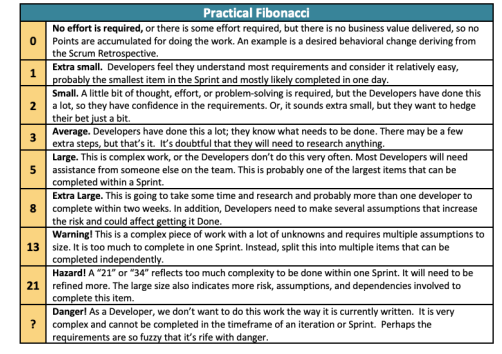
• While estimating by hours if not ideal, think of this as another factor when trying to point a story - this is effort taken to ensure the story is completed. *Below are examples of practicing the Fibonacci Pointing
• If the team is pointing user stories high (8+), consider splitting the story if need be
I.E. Can you split up Develop, QA, and Prod stories?